Do ancestral hair oils still hydrate textured hair?
Yes, ancestral hair oils, steeped in heritage, still profoundly hydrate textured hair through properties now affirmed by science.
Follicular Unit Optimization
Meaning ❉ Follicular Unit Optimization is the art and science of maximizing hair follicle vitality through comprehensive care, deeply informed by heritage.
What ancestral botanical balms aid textured hair?
Ancestral botanical balms, like shea butter and coconut oil, provided protective moisture and styling aid for textured hair, embodying centuries of heritage.
What traditional methods of hair protection did ancient Egyptians employ, and how do they resonate with textured hair heritage?
Ancient Egyptians used wigs, braids, and natural oils to protect hair, resonating with today's textured hair heritage for preservation.
How do traditional oils protect textured hair during sleep?
Traditional oils create a protective barrier, reducing friction and sealing moisture, honoring centuries of textured hair heritage.
How does ancestral clay protect textured hair?
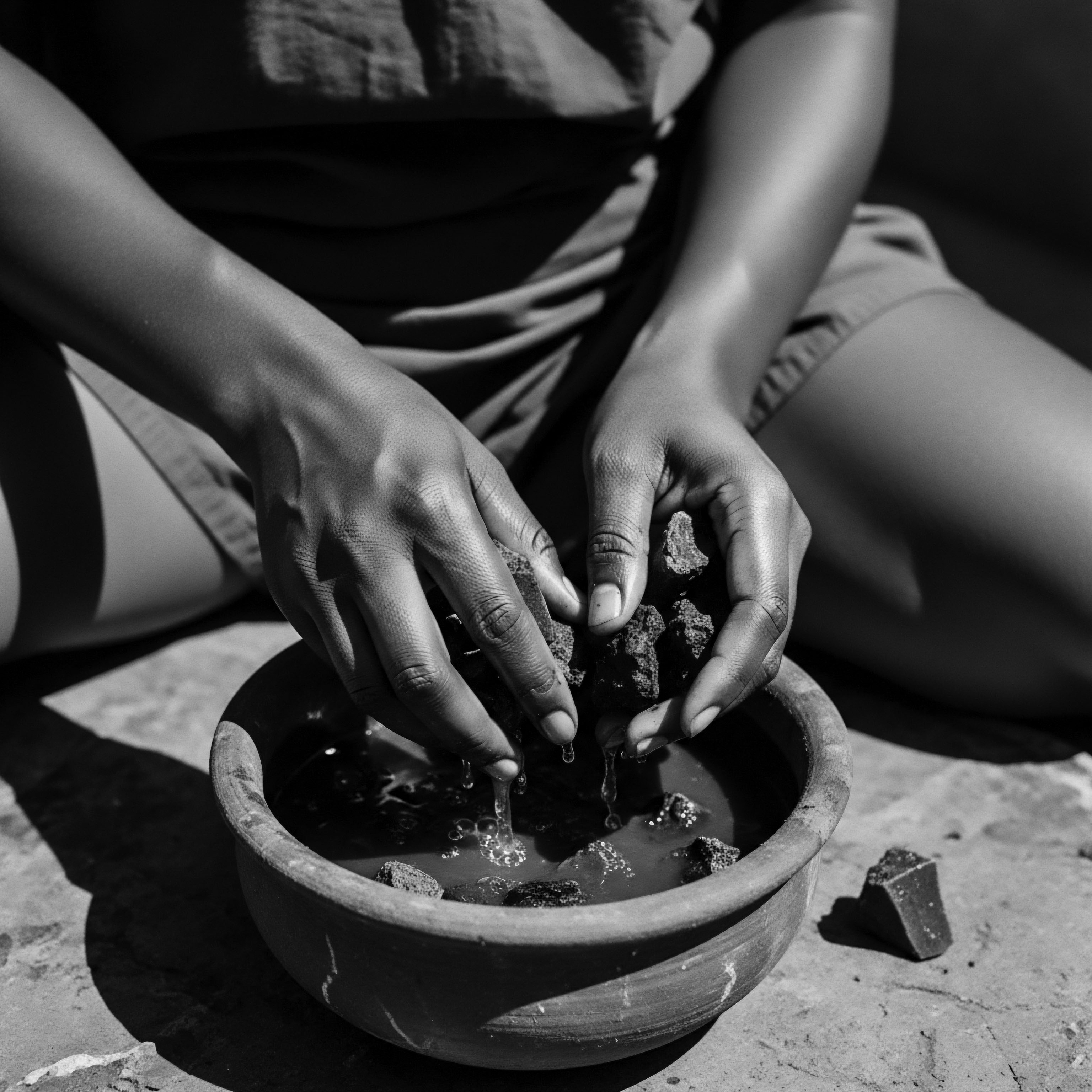
Ancestral clay protects textured hair by gently cleansing, drawing impurities, and physically shielding strands with earth's mineral richness.
What ancestral tools shielded textured hair at night?
Ancestral tools like plant-based wraps and early head coverings shielded textured hair at night, preserving styles and moisture through a deep heritage of care.
What ancestral practices show the protective heritage of textured hair?
Ancestral practices for textured hair protection include protective styling, natural oil application, and head coverings, deeply woven into cultural heritage.
Can ancient oiling practices offer modern textured hair solutions?
Ancient oiling practices offer invaluable, heritage-rich methods for nourishing and protecting modern textured hair.
How do traditional shea butter processes enhance textured hair?
Traditional shea butter processes enhance textured hair by preserving nutrient-rich compounds vital for moisture, elasticity, and scalp health, connecting us to ancestral wisdom.
Can textured hair heritage truly enhance modern universal hair care techniques?
Textured hair heritage offers a deep well of knowledge, enhancing modern techniques with time-tested wisdom and holistic care principles.
What benefits does yucca offer for textured hair compared to modern cleansers?
Yucca offers a gentle, natural cleanse for textured hair, respecting its moisture balance through saponins, honoring ancestral heritage.
How has textured hair influenced modern identity expressions?
Textured hair mirrors a heritage of strength, resistance, and self-acceptance, directly influencing contemporary identity expressions.
How do clays benefit textured hair historically?
Clays provided ancestral textured hair with gentle cleansing, mineral fortification, and scalp health, deeply rooted in historical communal care.
How does modern hair science validate historical protective practices for textured hair?
Modern hair science validates historical protective practices for textured hair by demonstrating their efficacy in preserving moisture and strength, thereby honoring ancestral wisdom.
In what ways do head coverings aid hair health for textured hair?
Head coverings protect textured hair from friction and environmental elements, preserving moisture and preventing breakage, a practice deeply rooted in ancestral care and cultural heritage.
Can ancient hair treatments offer effective solutions for contemporary textured hair challenges?
Ancient hair treatments offer effective solutions for textured hair challenges by aligning ancestral wisdom with contemporary science to support hair heritage.
Were ancient Egyptian hair protection methods effective for textured hair?
Ancient Egyptian methods, including oil use and protective styles, were effective for textured hair by providing moisture and environmental protection.
Can the science of textured hair validate ancient care wisdom?
The science of textured hair increasingly validates ancient care wisdom, affirming ancestral practices through biological and chemical understanding.
Why do traditional materials matter for textured hair health?
Traditional materials matter for textured hair health by deeply connecting us to ancestral wisdom, providing tailored care for inherent hair biology.
How did textured hair protect early humans?
Textured hair protected early humans by providing natural insulation and UV shielding, a heritage of adaptive resilience.
Can ancient arid land oils provide long-term moisture for textured hair today?
Ancient arid land oils offer long-term moisture for textured hair by strengthening its barrier and connecting to a rich heritage of care.
What is the biological reason textured hair requires special care?
Textured hair's distinct biology, shaped by heritage, with elliptical follicles and uneven cuticles, necessitates specific, moisture-focused care.
How did historical scalp care practices influence textured hair vitality?
Historical scalp care practices directly sustained textured hair vitality through natural ingredients and meticulous rituals, affirming a rich heritage.
How did ancient Egyptian tools aid textured hair?
Ancient Egyptian tools aided textured hair through specialized comb designs and nourishing plant-based products, reflecting a deep, continuous heritage of care.
What cultural beliefs shaped ancient textured hair styling with plants?
Ancient textured hair styling with plants was shaped by beliefs linking hair to spiritual well-being, social status, and deep connection to ancestral land.
Can modern science validate historical plant use for textured hair?
Modern science confirms that many historical plant uses for textured hair offer verifiable benefits, affirming ancestral wisdom.
Are ancient oils suitable for contemporary textured hair?
Ancient oils offer profound benefits for textured hair, rooted in ancestral wisdom and validated by science.
Can textured hair typology align with traditional understandings?
Textured hair typology finds resonance with traditional understandings through ancient practices that inherently recognized hair's unique structure and cultural significance.