What historical connections exist between shea butter and textured hair care?
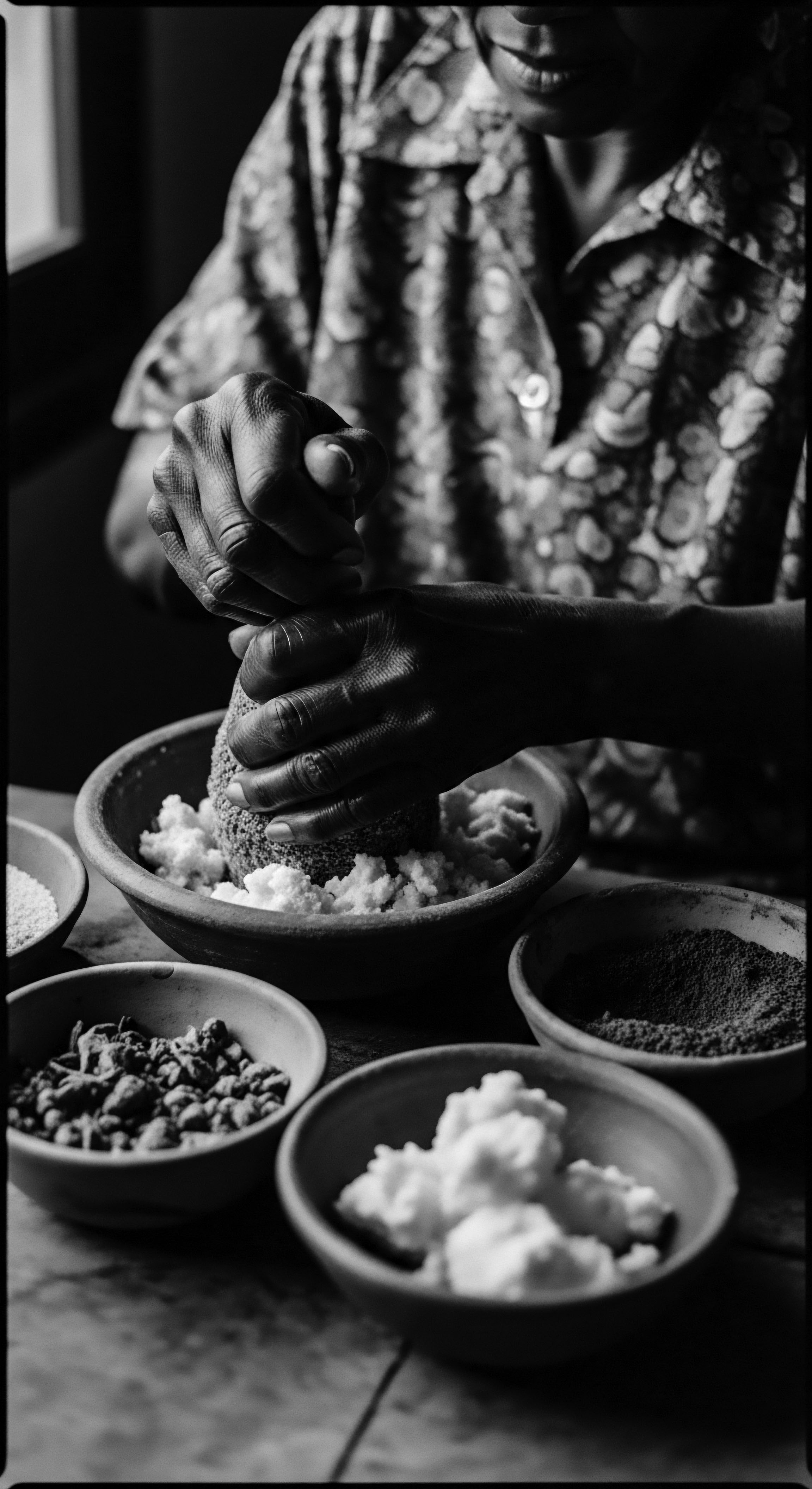
Shea butter holds ancient roots in West African heritage, serving as a cherished natural emollient for textured hair care and cultural expression.
What historical dietary shifts changed textured hair growth?
Historical dietary shifts, particularly those of enslavement, significantly altered textured hair growth and health through nutrient deprivation.
In what ways did colonial history impact the perception of textured hair?
Colonial history devalued textured hair from a cultural crown to a mark of inferiority, shaping beauty standards and care practices across generations.
What ancestral wisdom can guide modern textured hair product choices?
Ancestral wisdom highlights textured hair’s unique needs, guiding modern product choices towards inherited botanical ingredients and protective practices.
Which oils were historically favored for textured hair in different cultures?
Historically, favored oils for textured hair were diverse botanical gifts that nurtured hair and upheld cultural identity.
How do ancestral traditions shape textured hair washing?
Ancestral traditions shape textured hair washing through inherited botanical wisdom, communal rituals, and a holistic approach validating scientific principles.
What traditional practices enhanced textured hair hydration?
Ancestral practices for textured hair hydration centered on natural emollients and protective styles, rooted in a deep cultural heritage of care.
How did the transatlantic slave trade impact textured hair perceptions?
The transatlantic slave trade distorted textured hair perceptions, changing a heritage of cultural pride into a symbol of subjugation.
What ancestral techniques offer timeless solutions for textured hair maintenance and growth?
Ancestral techniques offer timeless solutions for textured hair maintenance and growth by grounding care in heritage, holistic practices, and deep cultural understanding.
Why does textured hair hold deep meaning?
Textured hair signifies identity, cultural resilience, and an unbroken lineage of ancestral wisdom and self-expression.
How do historical hair rituals influence today’s textured hair health?
Historical hair rituals shape today's textured hair health by providing a heritage of protective styling, natural ingredients, and holistic care.
What historical meaning do hair coverings possess for Black heritage?
Hair coverings for Black heritage symbolize identity, resistance, and ancestral wisdom, evolving from status markers to protective and defiant statements.
What traditional ingredients support modern textured hair health?
Traditional ingredients like shea butter, coconut oil, and amla nourish textured hair by honoring ancestral wisdom and unique hair biology.
What ancestral wisdom guides current textured hair nighttime care?
Ancestral wisdom guides textured hair nighttime care through practices of protection, moisture sealing, and gentle styling, rooted in cultural heritage.
Can modern hair science affirm traditional hair care wisdom from heritage?
Modern hair science illuminates and validates the profound wisdom embedded in traditional textured hair care practices.
What historical oil deeply conditioned Caribbean textured hair?
Historical Caribbean oils, like coconut and Jamaican Black Castor Oil, deeply conditioned textured hair through ancestral wisdom and unique properties.
Hair Typology Alignment
Meaning ❉ Hair Typology Alignment is the harmonious connection between textured hair's intrinsic nature and its optimal, culturally informed care practices.
Why do textured scalps benefit from shea butter?
Shea butter provides ancestral moisture and anti-inflammatory properties that deeply benefit textured scalps prone to dryness, honoring hair heritage.
In what ways does hair heritage shape current care choices?
Hair heritage deeply shapes care choices through ancestral techniques, identity, and profound cultural significance.
Can traditional botanicals strengthen textured hair over time?
Traditional botanicals can strengthen textured hair over time by aligning with ancestral care practices that nurture strands and scalp.
How did protective hair practices preserve Black heritage?
Protective hair practices anchored Black heritage by safeguarding textured hair's physical integrity and serving as powerful cultural, communication, and identity markers.
What ancient botanical practices guided textured hair care rituals and identity?
Ancient botanical practices guided textured hair care through deep ecological wisdom, nurturing strands and affirming cultural identity.
What ancient practices offer effective moisture for textured hair?
Ancient practices use natural ingredients and communal rituals to provide deep, enduring moisture for textured hair, honoring a rich heritage of care.
What communal practices supported hair care heritage?
Communal practices supported textured hair heritage by fostering shared identity, resisting oppression, and transmitting ancestral care wisdom across generations.
What ancient food customs protected textured hair for future generations?
Ancient food customs, through diet and topical uses, nourished textured hair's structure and resilience, shaping its heritage.
What ancestral knowledge of shea butter informs modern textured hair care?
Ancestral shea butter wisdom informs modern textured hair care by emphasizing deep moisture, protection, and holistic well-being, preserving a rich heritage.
Textured Cleansing
Meaning ❉ Textured Cleansing is a heritage-informed approach to purifying patterned hair, prioritizing natural moisture and cultural affirmation.
What earth-derived agents cleansed early textured hair?
Early textured hair was cleansed using earth-derived agents like saponin-rich plants, mineral clays, and acidic rinses, reflecting ancestral ingenuity.
How does hair heritage shape current moisture retention strategies?
Hair heritage shapes moisture retention by revealing ancestral methods and natural ingredients still vital for textured hair's unique needs.