Which natural oils sustained textured hair health across generations?
Ancestral practices and modern science reveal natural oils like shea butter, castor, and coconut oil provided moisture and protection for textured hair across generations.
How ancestral practices shaped contemporary textured hair protection?
Ancestral practices for textured hair protection stemmed from deep cultural knowledge and physical necessity, shaping contemporary care with enduring heritage wisdom.
What historical cleansing agents used water for textured hair?
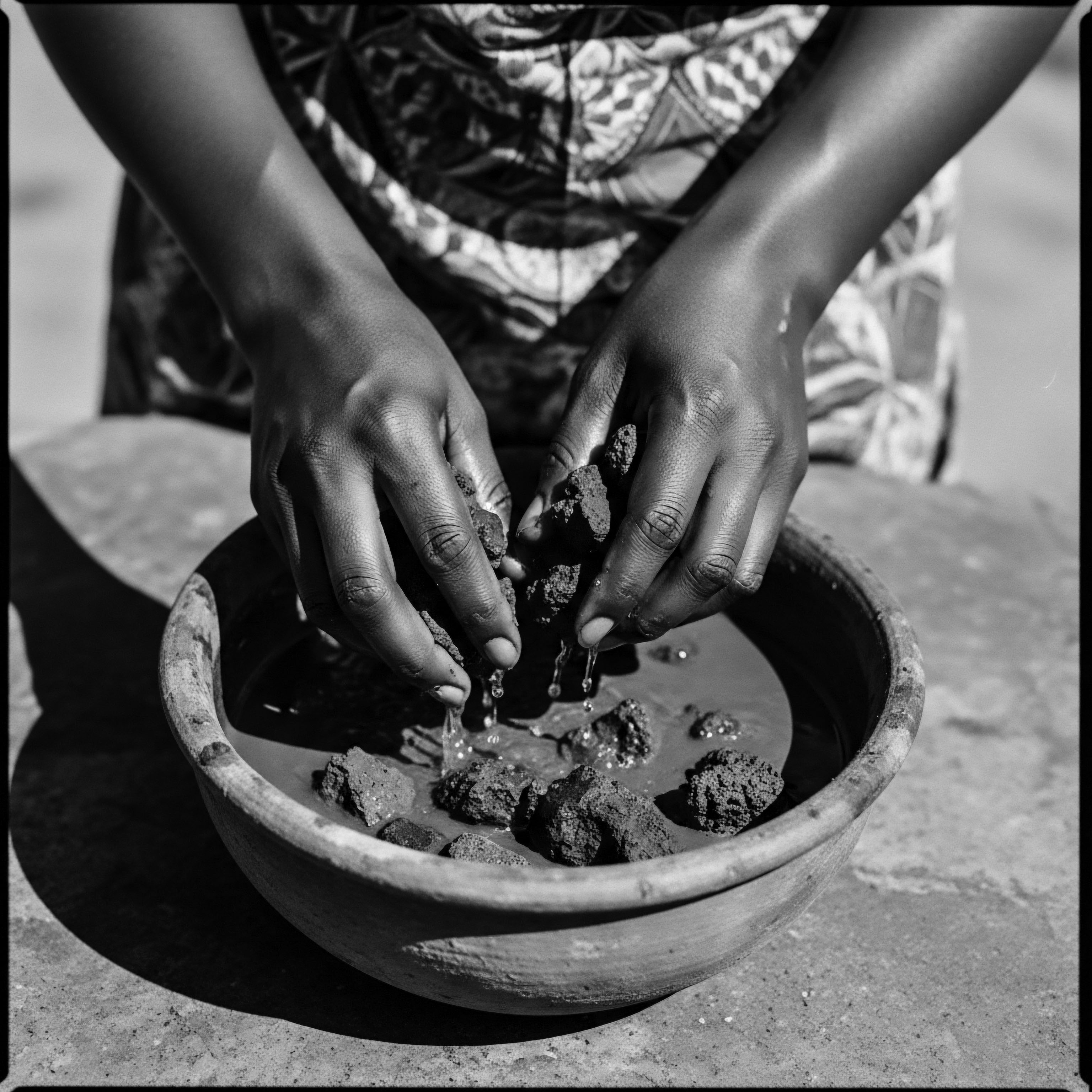
Historical cleansing agents for textured hair, often used with water, primarily involved natural saponins from plants, absorbent clays, and pure water with mechanical agitation, all rooted in ancestral wisdom.
Can ancestral oiling practices inform modern textured hair care?
Ancestral oiling practices deeply inform modern textured hair care by offering a rich heritage of intuitive ingredient selection, communal ritual, and protective styling wisdom.
What mineral properties in Rhassoul clay aid textured hair growth?
Rhassoul clay's magnesium and silica nourish the scalp and strands, echoing ancestral practices for textured hair vitality.
Why is moisture retention important for textured hair at night?
Nightly moisture retention for textured hair preserves its inherited vitality and structural integrity against environmental stressors.
In what ways did ancient botanical practices validate scientific principles for textured hair?
Ancient botanical practices intuited scientific principles, providing deep moisture and strength for textured hair through heritage ingredients.
What plants did ancient cultures use to cleanse textured hair?
Ancient cultures cleansed textured hair using plants like soapnut, shikakai, and yucca root, honoring ancestral methods.
Why do biophysical factors influence moisture retention in textured hair?
Textured hair’s unique coiled structure and lifted cuticles inherently influence moisture retention, a challenge intimately understood across its heritage.
Can modern science validate ancient textured hair traditions?
Modern scientific inquiry often provides empirical confirmation for the inherent effectiveness of ancient textured hair traditions, rooted deeply in heritage.
Can ancient African hair rituals inform modern care for textured strands?
Ancient African hair rituals profoundly inform modern textured hair care by offering time-tested wisdom on protection, natural ingredients, and holistic well-being.
What scientific understandings validate traditional textured hair ingredients?
Scientific understandings validate traditional textured hair ingredients by revealing their rich chemical compositions align with ancestral moisturizing, strengthening, and protective heritage.
Can ancient hair care methods with shea butter still benefit modern textured hair?
Ancient shea butter methods, deeply rooted in African heritage, continue to nourish and protect modern textured hair.
What ancestral practices align with modern porosity knowledge for textured hair?
Ancestral hair care practices intuitively aligned with modern porosity knowledge through observation, plant-based remedies, and protective styling, preserving textured hair heritage.
Can ancient hair care rituals offer benefits for today’s textured strands?
Ancient hair care rituals rooted in heritage offer profound benefits for today's textured strands, validating ancestral wisdom through modern science.
Can preserving textured hair overnight reinforce ancestral beauty standards?
Overnight hair preservation affirms ancestral beauty standards by prioritizing health and protection for textured hair.
Can traditional botanical ingredients improve textured hair health today?
Traditional botanical ingredients significantly enhance textured hair health today by reconnecting us with ancestral wisdom and natural solutions.
What traditional ingredients protect textured hair from breakage?
Traditional ingredients like shea butter and coconut oil, used in ancestral rituals, shielded textured hair from breakage.
Gray Hair Acceptance
Meaning ❉ Gray Hair Acceptance signifies the embrace of hair's natural graying process, particularly for textured hair, as an act of self-sovereignty and cultural reclamation.
What ancestral practices shield textured hair from environmental stressors?
Ancestral practices shielded textured hair through natural emollients, protective styles, and head coverings, deeply connecting care to environmental adaptation.
What cultural role has Rhassoul clay played in Moroccan hair heritage?
Rhassoul clay holds deep cultural significance in Moroccan hair heritage, serving as a revered natural cleanser and conditioner for textured hair.
What scientific principles explain the enduring effectiveness of ancestral hair remedies for textured strands?
Ancestral hair remedies for textured strands are effective due to inherent scientific principles, deeply intertwined with cultural heritage.
How do ancestral butters hydrate textured hair?
Ancestral butters hydrate textured hair by creating a protective barrier, sealing moisture, and honoring a legacy of natural care.
What enduring heritage of hair care guides contemporary coil protection?
Ancestral practices, rooted in resilience, inform contemporary coil protection, emphasizing moisture and gentle care across generations.
How do historical hair care methods connect with textured hair identity?
Historical hair care methods deeply connect with textured hair identity by serving as living archives of ancestral wisdom, cultural pride, and resilience.
Do ancient plant remedies still benefit textured hair?
Ancient plant remedies continue to benefit textured hair, validating a rich heritage of natural care and ancestral wisdom.
Can ancient hair care practices inform modern oil selection for textured hair?
Ancient hair care practices, particularly oil selections, deeply inform modern choices for textured hair by highlighting enduring botanical wisdom.
In what ways do Black and mixed-race communities preserve oiling heritage?
Black and mixed-race communities preserve oiling heritage through intergenerational practice, traditional botanical use, and its role in affirming textured hair identity.
What specific fatty acids in palm oil support textured hair integrity?
Palm oil's palmitic, stearic, and oleic fatty acids support textured hair integrity by providing moisture sealing, lubrication, and deep conditioning rooted in ancestral care practices.