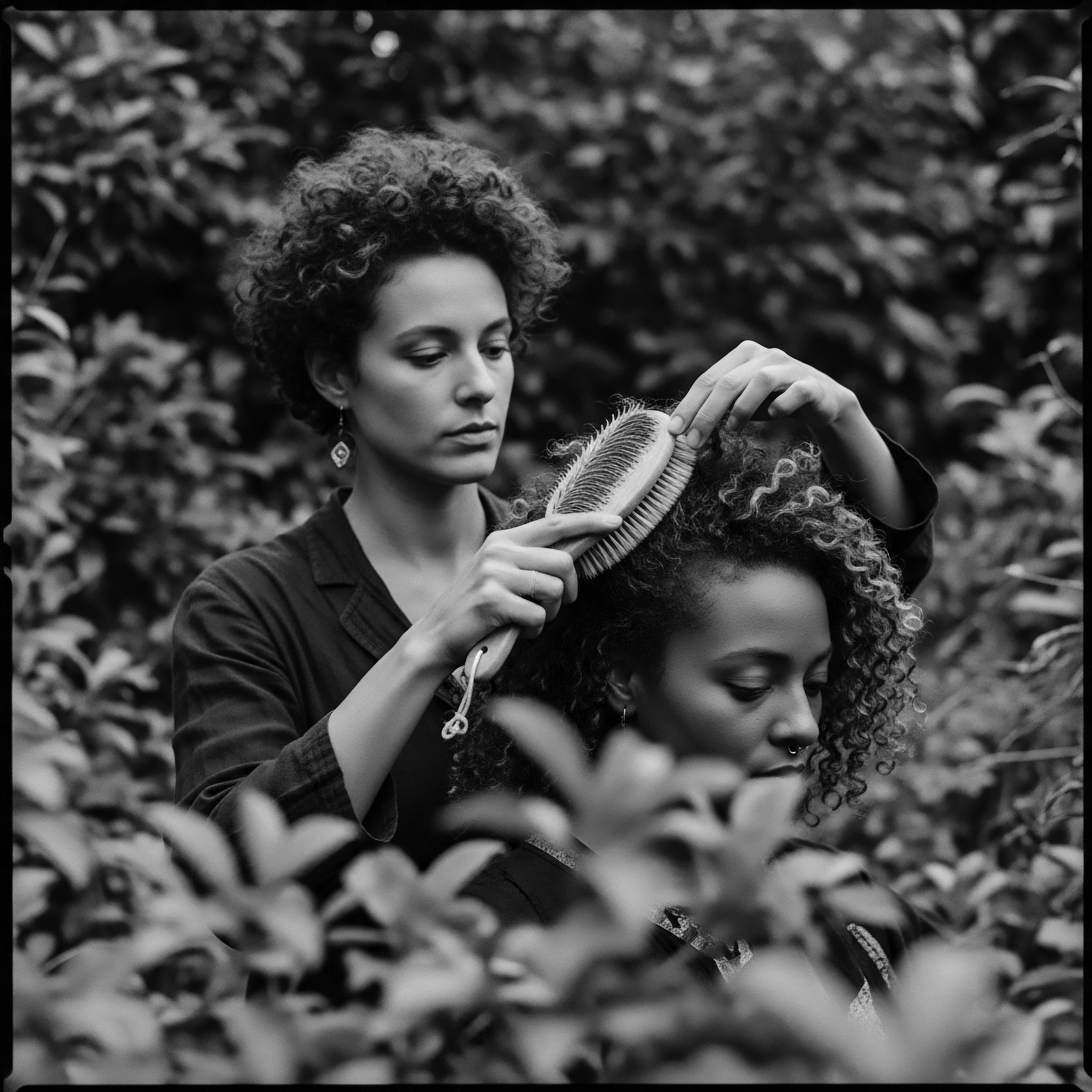
Can textured hair reveal hidden narratives of ancestral survival?
Textured hair acts as a living archive, its patterns and care rituals whispering stories of ancestral resilience and ingenuity.
What oils benefit textured hair?
Ancestral oils like shea butter, castor, baobab, and marula deeply benefit textured hair, rooted in centuries of Black care heritage.
What enduring cultural meaning does shea butter hold for textured hair heritage?
Shea butter embodies a deep cultural meaning for textured hair heritage, serving as a legacy of ancestral care, communal resilience, and identity.
In what ways do historical cleansing practices influence contemporary textured hair care?
Historical cleansing practices profoundly shape contemporary textured hair care, grounding it in ancestral wisdom of gentle, holistic, and culturally relevant routines.
How does shea butter’s structure aid textured hair?
Shea butter’s lipid composition and unsaponifiable compounds create a protective seal and enhance flexibility, a legacy of ancestral understanding.
Can ancient Amazonian Rahua oil rituals strengthen contemporary textured hair heritage?
Ancient Amazonian Rahua oil rituals deeply enrich contemporary textured hair heritage through shared principles of nourishing care.
What ancient practices offer resilience for textured hair mental composure?
Ancient textured hair practices rooted in heritage offer mental composure through intentional care and communal identity.
How do ancestral hair care practices from North Africa connect with modern textured hair regimens?
Ancestral North African hair care practices offer timeless insights into moisturizing and safeguarding textured hair, enriching contemporary regimens.
Why do pre-colonial protective styles remain relevant for textured hair?
Pre-colonial protective styles endure for textured hair by providing essential care, preserving cultural identity, and connecting individuals to their deep ancestral heritage.
How Does Shea Butter Support Textured Hair?
Shea butter, a timeless gift from West Africa, deeply nourishes textured hair, preserving its heritage and resilience.
What historical cleansing agents influenced textured hair care beyond Ghassoul?
Ancestral textured hair cleansing utilized natural saponin-rich plants, clays, and rice water, preserving heritage through holistic care.
Can ancient hair practices inform modern care for textured coils?
Ancient hair practices provide a heritage-rich blueprint for modern coiled hair care, emphasizing protection, natural ingredients, and cultural expression.
What scientific properties of shea butter validate traditional textured hair use?
Shea butter’s fatty acids, anti-inflammatory triterpenes, and antioxidants scientifically affirm its centuries-old use for textured hair moisture, scalp health, and protection, connecting deeply to heritage.
What scientific evidence supports historical practices for textured hair?
Scientific inquiry affirms historical textured hair practices offer demonstrable benefits, reflecting profound ancestral wisdom and heritage.
What historical evidence connects henna to textured hair?
Historical evidence connects henna to textured hair through ancient Egyptian mummies, North African Berber traditions, and South Asian practices.
What scientific benefits did ancestral clay use provide for textured hair?
Ancestral clay use provided scientific benefits for textured hair through natural cleansing, mineral nourishment, and gentle detangling, deeply rooted in cultural heritage.
What ancestral oils aid textured hair moisture retention?
Ancestral oils, such as shea butter and coconut oil, enhance textured hair moisture retention by sealing strands and deeply nourishing them, reflecting centuries of inherited cultural wisdom.
Can ancient African hair rituals inform modern textured hair regimens?
Ancient African hair rituals offer profound heritage-rooted wisdom for holistic, effective modern textured hair care.
How did historical African oils protect textured hair?
Historical African oils, like shea butter and palm oil, formed protective barriers, sealed moisture, and reduced friction, preserving textured hair heritage.
What types of clay were historically used in textured hair care rituals?
Ancestral textured hair care rituals historically used Rhassoul, Red Ochre, and various mineral clays for cleansing, protection, and styling, deeply connecting to heritage.
What ancient African plants nurtured textured hair for cultural expression?
Ancient African plants like shea butter, baobab oil, and chebe powder nourished textured hair, embodying cultural expression and ancestral heritage.
How did historical protective styles aid textured hair?
Historical protective styles, rooted in ancestral wisdom, shielded textured hair from environmental stressors and manipulation, preserving its vitality.
What historical botanical practices aid textured hair strength?
Ancient botanical practices utilized plant oils, butters, and herbs to protect, moisturize, and strengthen textured hair across generations.
In what ways do traditional clay practices inform modern textured hair care?
Traditional clay practices, particularly from African and Moroccan heritage, significantly inform modern textured hair care by offering cleansing, conditioning, and scalp balancing properties.
How do ancestral hair care philosophies relate to contemporary textured hair practices?
Ancestral hair philosophies, rooted in deep observation, profoundly shape contemporary textured hair practices, underscoring a continuous heritage of care.
How do African cleansing plants benefit textured hair?
African cleansing plants offer gentle, moisture-preserving benefits to textured hair, rooted deeply in ancestral heritage.
What specific nutrient deficiencies impacted textured hair historically?
Historically, protein, iron, and B vitamin deficits from limited diets weakened textured hair, echoing through its heritage and modern care.
What minerals in Ghassoul clay benefit textured scalp?
Ghassoul clay's minerals cleanse, soothe, and strengthen the textured scalp, honoring centuries of ancestral hair care wisdom.