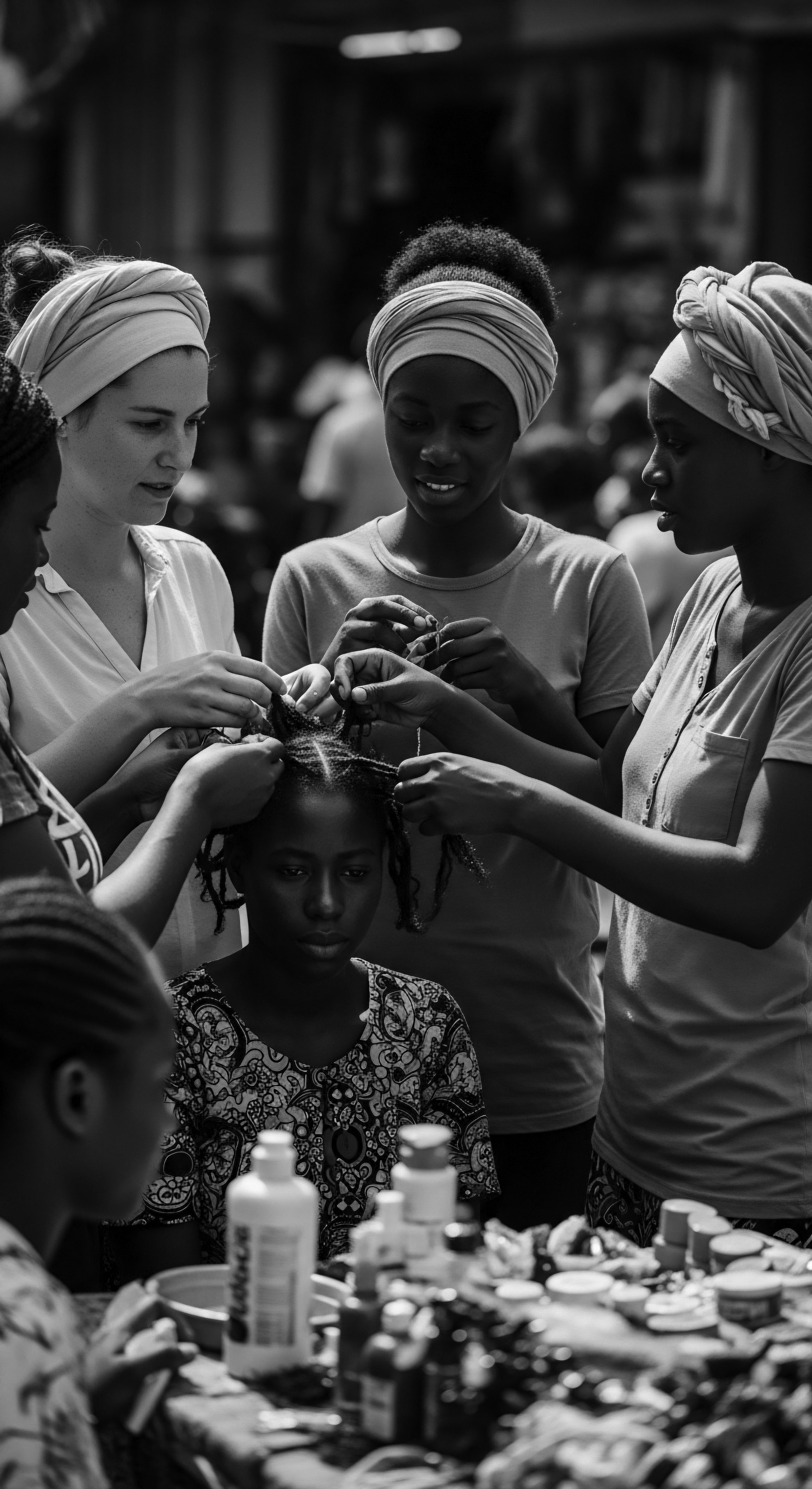
Did textured hair’s form shape ancient care?
Textured hair's distinct form necessitated ancient care practices, shaping tools and rituals deeply embedded in its rich heritage.
What natural substances colored Egyptian textured hair?
Ancient Egyptians colored textured hair primarily with henna, achieving reddish tones, a practice deeply embedded in their heritage and rituals.
Which plant compounds have supported textured hair health historically?
Ancestral communities historically supported textured hair health using plant compounds like shea butter, Chebe powder, and African black soap.
Did ancient dyes harm textured hair specifically?
Ancient dyes, primarily natural plant-based ones, generally did not harm textured hair, often conditioning it as part of ancestral care rituals.
Can traditional Chebe application benefit diverse textured hair types?
Traditional Chebe application benefits diverse textured hair by reducing breakage and aiding length retention through ancestral protective methods.
In what ways does hair heritage influence contemporary care routines and self-perception?
Hair heritage deeply shapes care routines and self-perception by linking ancestral practices with contemporary identity and resilience.
What plant-based ingredients cleaned textured hair naturally through history?
Plant-based ingredients like yucca, shikakai, soapnuts, and various clays historically cleansed textured hair, deeply rooted in ancestral heritage and cultural practice.
How does textured hair biology reflect human adaptation and ancestral environments?
Textured hair biology reflects human adaptation to ancestral environments, offering protection and serving as a heritage marker.
Which natural ingredients provided lasting color for textured hair?
Ancestral practices harnessed plants like henna and indigo, their pigments bonding profoundly with textured hair through time-honored rituals.
In what ways did textured hair represent identity and status historically?
Textured hair historically served as a profound visual language, signifying identity, social status, and cultural heritage across diverse communities.
Which traditional clays fortify textured hair?
Traditional clays, rooted in ancestral practices, fortify textured hair through mineral enrichment and gentle detoxification, honoring heritage.
What historical evidence shows plant use in textured hair cleansing?
Historical evidence confirms plant use for textured hair cleansing, revealing a rich heritage of botanical wisdom and ancestral care.
Why do ancient hair care rituals offer a unique connection to textured hair lineage?
Ancient hair care rituals provide a profound connection to textured hair lineage by encoding ancestral wisdom, cultural identity, and enduring resilience.
Which African plants benefit textured hair growth?
African plants offer a heritage-rich path to textured hair growth, grounding modern care in ancestral wisdom and potent botanical compounds.
What deeper cultural meanings did early comb materials carry for heritage?
Early comb materials carried complex meanings, reflecting status, identity, spiritual connection, and ancestral resilience for textured hair heritage.
What traditional methods shielded textured hair from sun damage?
Ancestral methods shielded textured hair from sun damage through physical coverings, protective styles, and natural emollients like shea butter.
Why did textured hair cleansing practices change during historical periods?
Textured hair cleansing practices shifted due to heritage, forced societal changes, and reclaiming ancestral wisdom.
Can shea butter’s ancient applications soothe contemporary textured scalps?
Shea butter’s ancient applications, rooted in textured hair heritage, offer deep hydration and anti-inflammatory properties for modern scalps.
What historical connection do plant oils hold for textured hair?
Plant oils hold deep historical connections for textured hair, serving as ancestral protectors and cultural touchstones.
In what ways do historical textured hair cleansing methods connect to cultural heritage?
Historical textured hair cleansing methods connect to cultural heritage through ancestral knowledge, communal rituals, and resilience against oppression.
What historical roles did natural oils serve for textured hair?
Natural oils served as protective agents, styling aids, and cultural anchors, deeply rooted in textured hair heritage and ancestral wisdom.
Follicular Unit Heritage
Meaning ❉ Follicular Unit Heritage is the intrinsic link between textured hair's biological structure and its profound historical, cultural, and ancestral significance.
Why does protecting textured hair matter for identity?
Protecting textured hair affirms identity by upholding a rich heritage of resilience, cultural knowledge, and profound selfhood.
What historical prejudices shaped perceptions of textured hair?
Historical prejudices distorted textured hair perceptions, erasing ancestral significance and imposing Eurocentric ideals, yet its heritage endures through resilience and reclamation.
How does heritage inform modern textured hair moisture practices?
Heritage profoundly shapes modern textured hair moisture practices by providing ancestral wisdom, traditional ingredients, and resilient care rituals.
In what ways did colonial laws impact textured hair identity?
Colonial laws systematically devalued and policed textured hair, transforming it from a revered cultural marker into a site of enforced subjugation.
What biocultural insights do historical head coverings provide for textured hair heritage?
Historical head coverings reveal how ancestral practices biologically protected textured hair while expressing deep cultural identity and heritage.
What ancestral practices shaped textured hair protection at night?
Ancestral nighttime practices safeguarded textured hair from environmental stressors and friction, preserving styles and fostering well-being.
What ancestral practices shaped textured hair’s significance?
Ancestral practices shaped textured hair's significance by rooting it in identity, spiritual connection, social status, and a profound form of resistance.