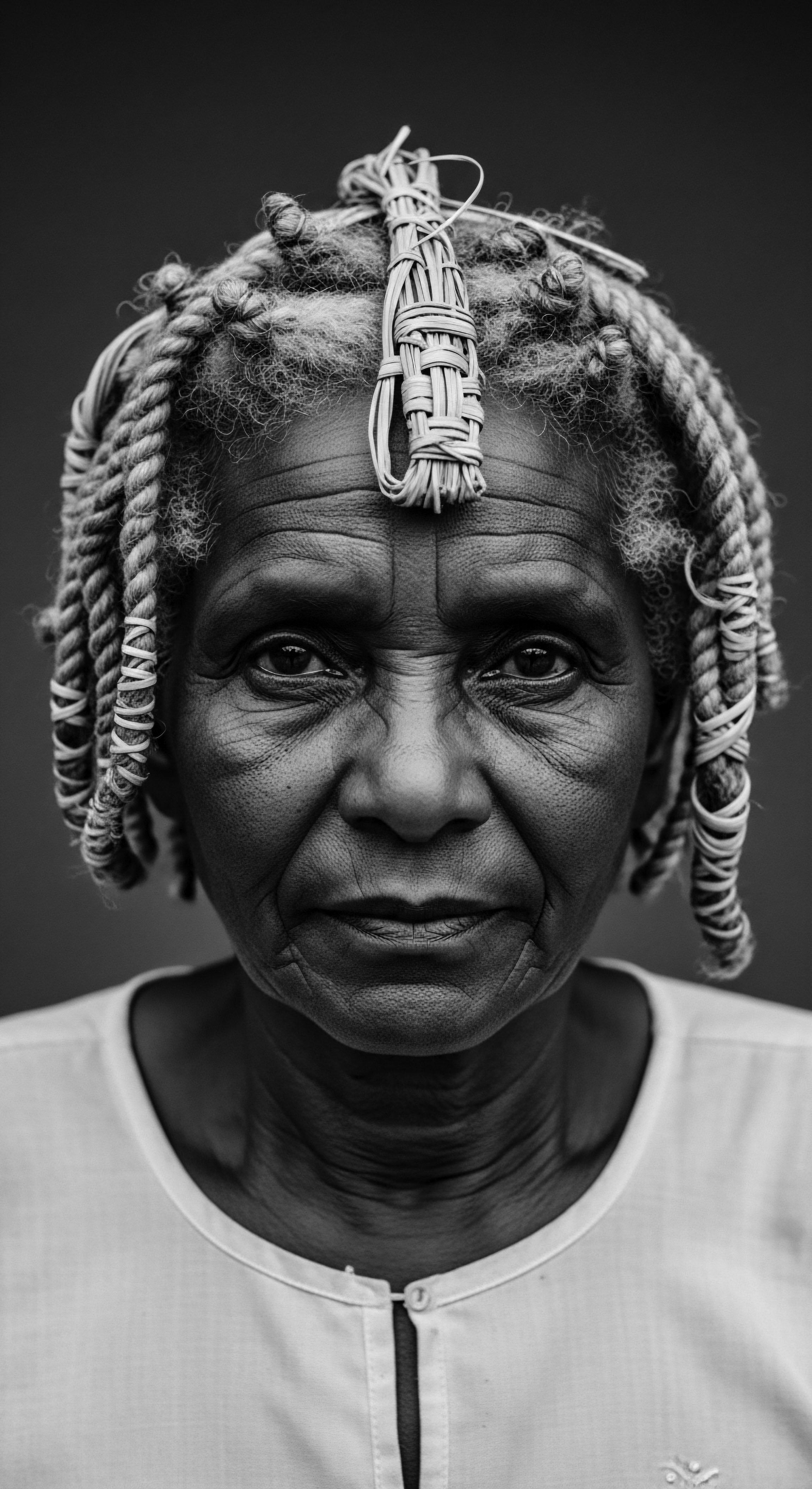
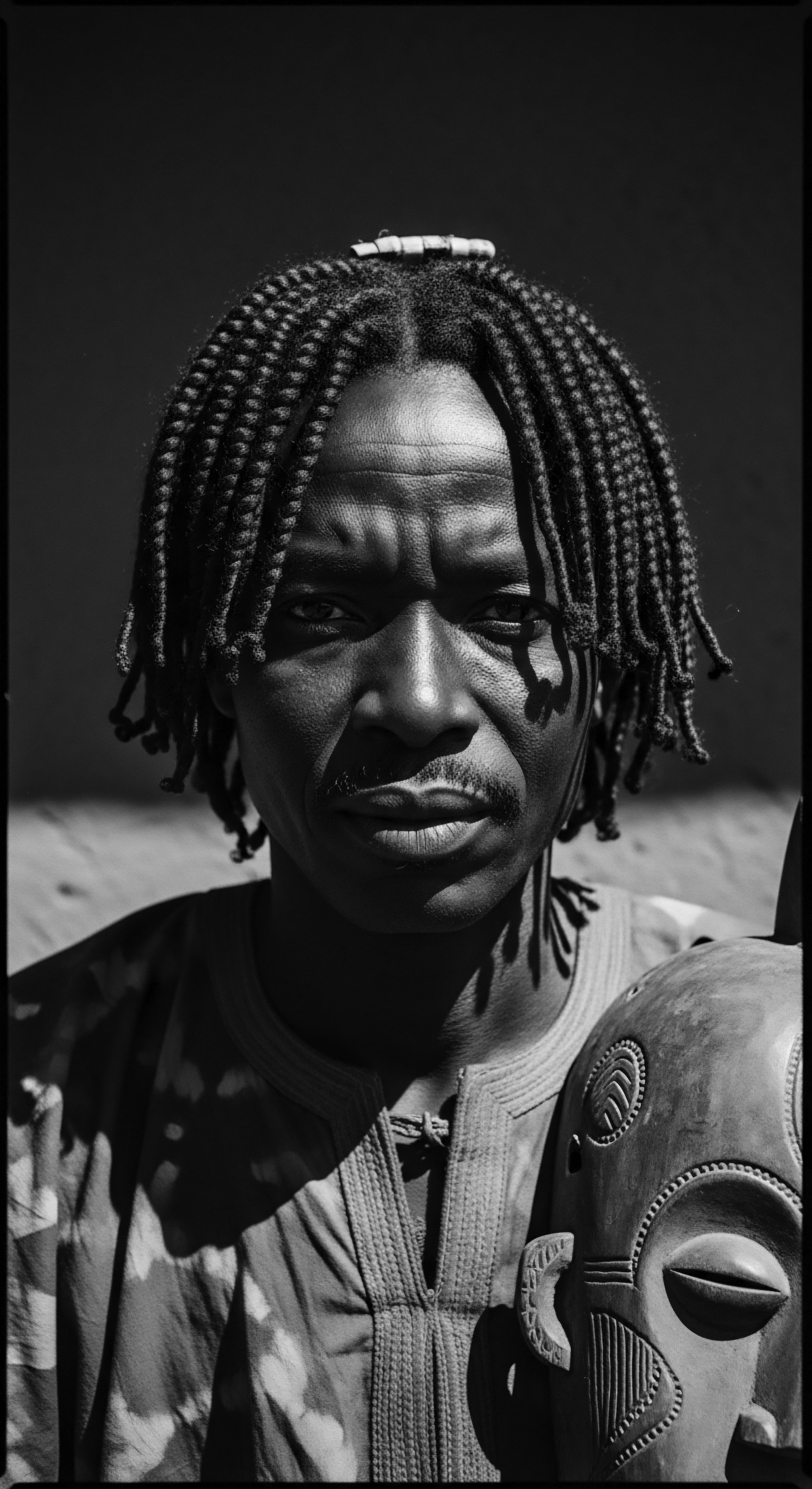
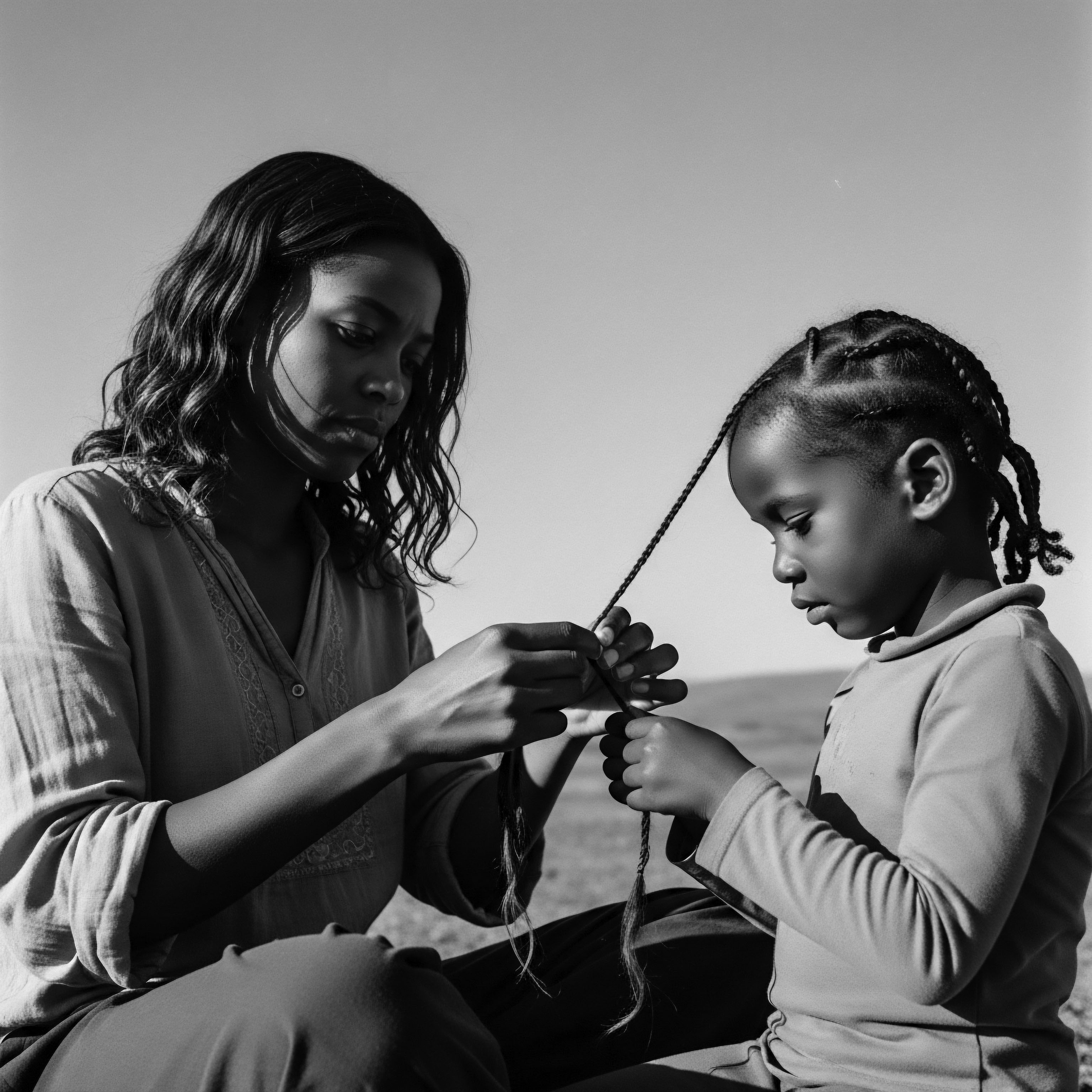
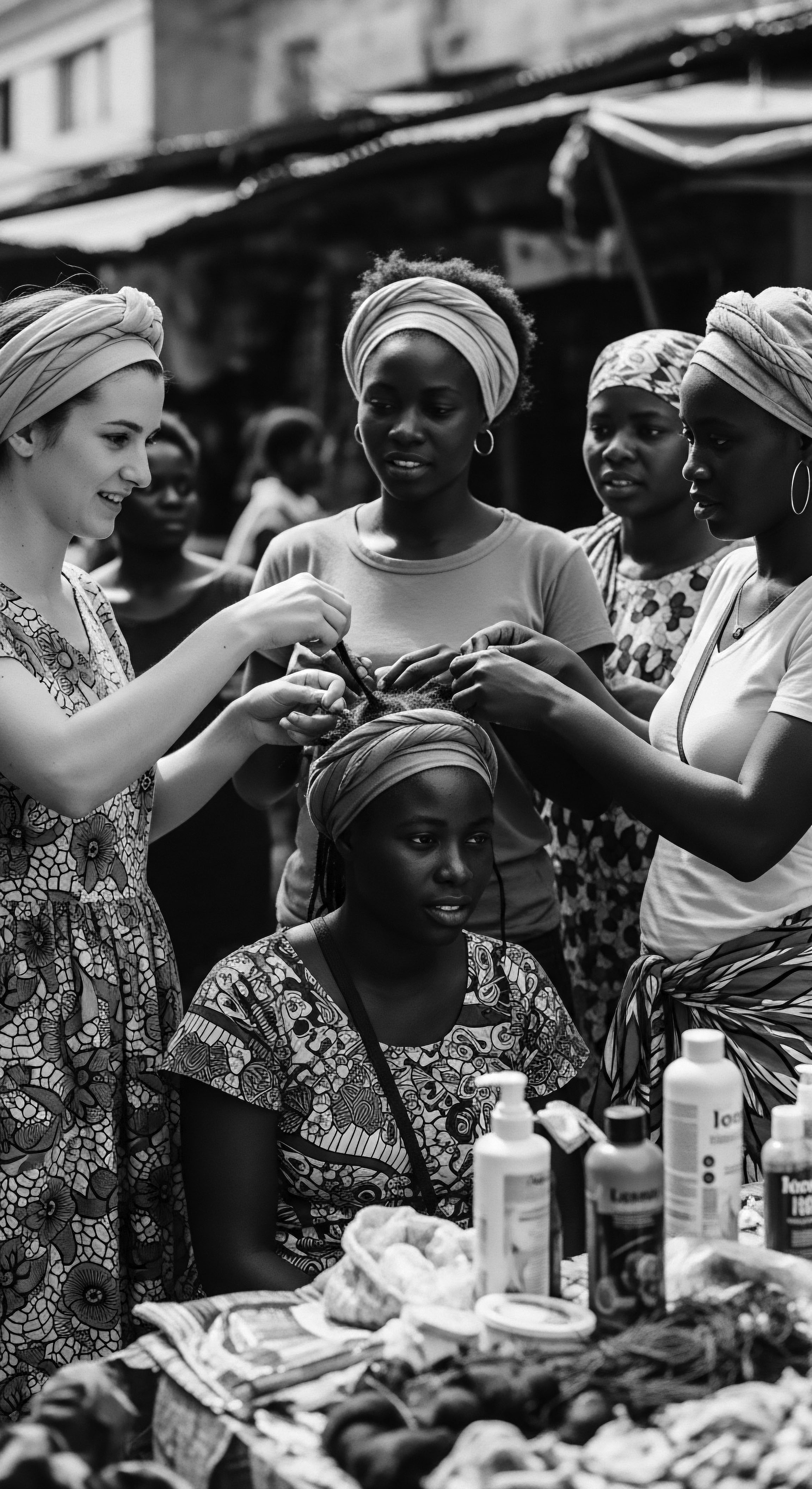
Meaning ❉ Traditional Hair Remedies encompass ancestral practices, ingredients, and communal rituals for nurturing textured hair, deeply rooted in cultural heritage and identity.
Meaning ❉ Hair Biology is the study of hair's structure and growth, profoundly shaped by the rich cultural heritage and ancestral wisdom of textured hair.
Ancestral ingredients like shea butter, Chebe powder, and various plant oils remain relevant for textured hair care, connecting modern routines to a rich heritage.
Plant applications historically shaped textured hair identity by providing essential care, enabling diverse styling, and serving as symbols of cultural heritage and resilience.
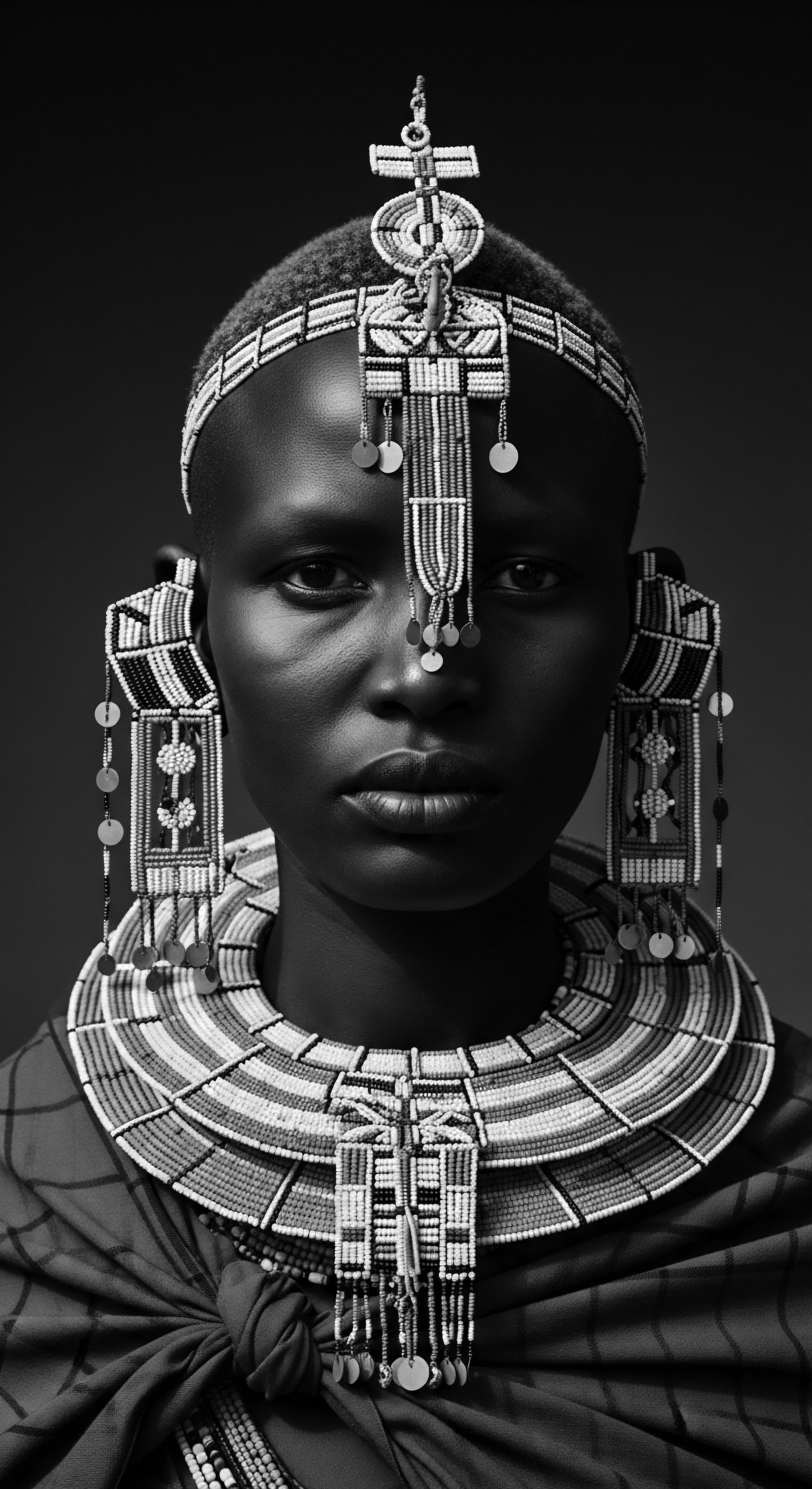
Meaning ❉ Hair Adornments are culturally significant objects woven into textured hair, serving as historical communicators of identity, status, and spiritual connection.
Hair heritage directly influences product ingredients by tracing ancestral remedies and cultural practices that inform modern formulations for textured hair.
Jamaican Black Castor Oil embodies ancestral hair care heritage through its origins in African traditional practices and its adaptation by resilient communities.
Historical African hair rituals provide a rich ethnobotanical and cultural blueprint for modern textured hair product development, honoring inherited wisdom.
The CROWN Act promotes societal shifts by legally affirming the right to wear textured hair and ancestral styles without discrimination, validating Black hair heritage.
Meaning ❉ Hair Care is the holistic system of practices and cultural expressions for textured hair, deeply rooted in ancestral wisdom and diasporic resilience.
Meaning ❉ Cultural Reclamation for textured hair is the intentional process of reviving and honoring ancestral hair practices, meanings, and identities that were historically suppressed.
Traditional hair care heritage profoundly shapes product innovation by offering timeless wisdom on ingredients, styling techniques, and holistic care for textured hair.
Meaning ❉ Nighttime Hair Protection refers to deliberate methods of safeguarding hair during sleep to reduce damage, preserve moisture, and maintain style, deeply rooted in textured hair heritage.
The CROWN Act affirms cultural heritage by legally protecting natural and protective Black hairstyles, recognizing them as integral to racial identity and ancestral practices.
Textured hair signifies heritage and defiance through its deep connection to ancestral practices, cultural identity, and persistent resistance against oppressive beauty standards.
Enslaved communities preserved hair heritage through ingenious adaptation, covert communication, and communal care, affirming identity and cultural continuity.
We use cookies to personalize content and marketing, and to analyze our traffic. This helps us maintain the quality of our free resources. Manage your preferences below.
This helps support our free resources through personalized marketing efforts and promotions.
Analytics cookies help us understand how visitors interact with our website, improving user experience and website performance.
Personalization cookies enable us to customize the content and features of our site based on your interactions, offering a more tailored experience.