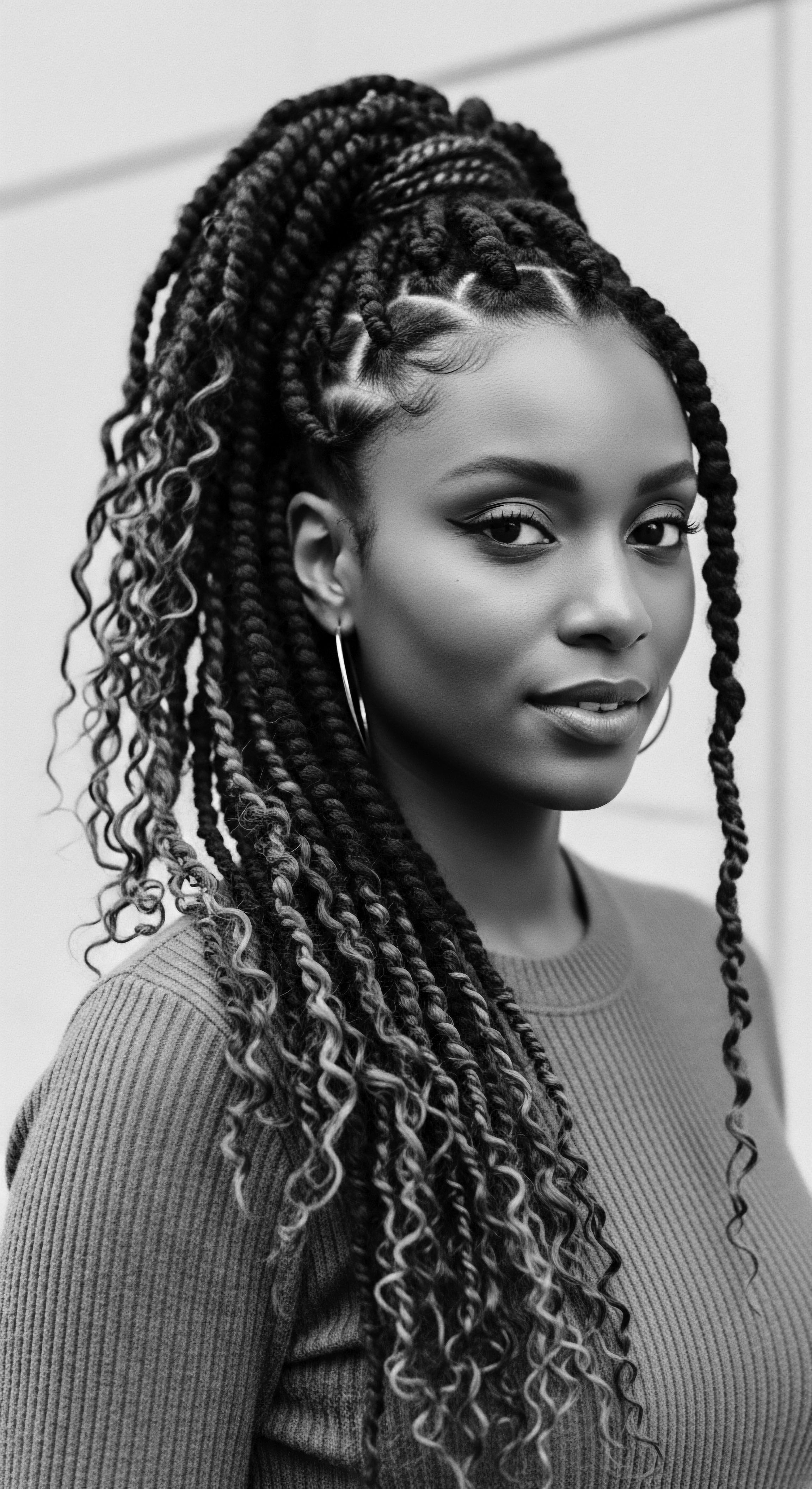
Meaning ❉ New Orleans culture signifies a dynamic confluence of African, French, Spanish, and Indigenous heritage, deeply expressed through its textured hair traditions.
Ancient African oils nourished textured hair by providing deep moisture, protective barriers, and essential nutrients, a heritage-rich approach to hair health.
Traditional oils honor textured hair heritage by preserving ancestral practices, offering vital nourishment, and symbolizing cultural identity and resilience.
Ancient African hair rituals offer a profound, heritage-rich framework for modern textured hair care, validating ancestral wisdom with contemporary understanding.
Textured hair care rituals are profound acts of cultural continuity, deeply influencing community well-being by affirming heritage and collective identity.
Meaning ❉ The profound internal affirmation of one's natural textured hair, celebrating its unique characteristics and ancestral legacy without external conformity.
Meaning ❉ Ancient Hair Science describes the ancestral, culturally embedded wisdom and practices for holistic hair care, particularly for textured hair.
Meaning ❉ Traditional Butters are unrefined plant fats, deeply rooted in ancestral practices, offering protective and restorative care for textured hair across generations.
Meaning ❉ Indigenous Hair Solutions refer to ancestral, culturally rooted practices and botanicals for textured hair, embodying identity, community, and resilience.
Meaning ❉ The Psychological Benefits in textured hair heritage refer to profound affirmations of identity, self-esteem, and community connection derived from culturally resonant hair care practices.
Ancient African ingredients shaped textured hair care by providing deep nourishment and protection, reflecting a heritage of intuitive botanical knowledge and cultural reverence for strands.
Meaning ❉ Afro-Indigenous Hair Practices define the profound ancestral, cultural, and scientific traditions of hair care and identity for textured hair.
Textured hair served as a covert medium of resistance during enslavement, conveying escape routes and preserving cultural heritage through intricate styling and communal care.
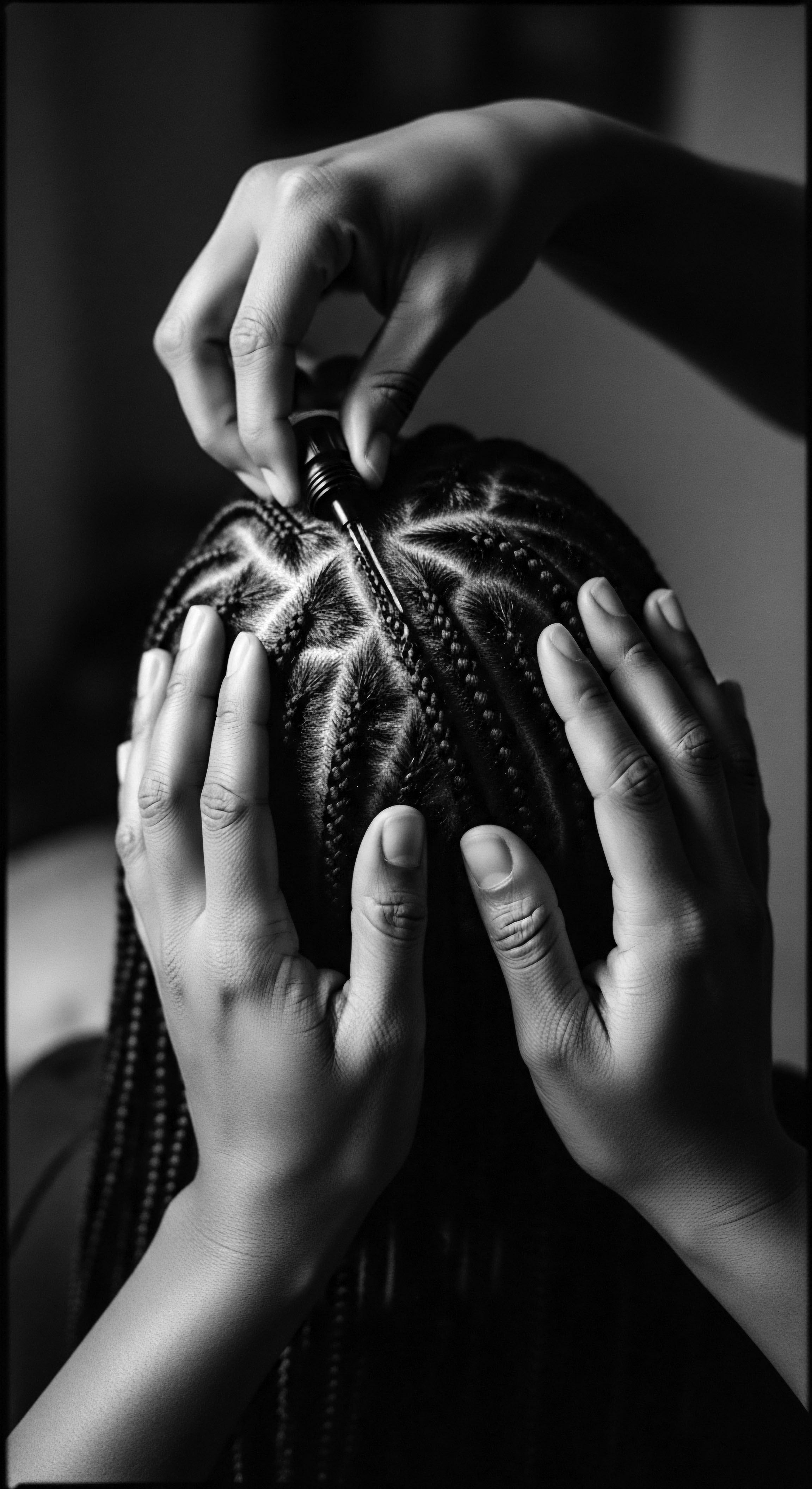
Meaning ❉ Cornrow Symbolism refers to the profound cultural, historical, and social meanings embedded within the intricate braided patterns of textured hair.
Meaning ❉ Black Identity Heritage defines the profound cultural, historical, and biological significance of textured hair within Black and mixed-race communities.
Meaning ❉ Hair Self-Perception is an individual's internal understanding of their hair, deeply influenced by cultural heritage and personal experiences.
Meaning ❉ Moisture Needs describes the intrinsic hydration required by hair, particularly textured strands, deeply rooted in ancestral wisdom and scientific understanding.
Traditional textured hair hydration methods align with scientific insights through the ancestral use of occlusive oils, humectants, and protective styles that intuitively sealed moisture and minimized damage.
Meaning ❉ African Hair Philosophies delineate hair as a profound cultural archive, intertwining ancestral wisdom, identity, and resilience within textured hair heritage.
Traditional hair rituals inform modern textured hair regimens through shared principles of nourishment, protection, and identity, rooted deeply in heritage.
Meaning ❉ The Spiritual Hair Connection is the deep, interwoven meaning of hair as a conduit for ancestral wisdom, cultural identity, and personal power.
Meaning ❉ KRTAP Genes are a family of genetic instructions shaping hair's structural integrity, curl patterns, and texture, deeply intertwined with ancestral heritage.
Ancestral hair care offers timeless wisdom, blending botanical knowledge and protective styling that deeply informs modern textured hair wellness through a heritage lens.
Textured hair's historical connection to collective defiance is rooted in its role as a powerful, visual assertion of identity, heritage, and resistance against oppression.
Meaning ❉ Black Hair Autonomy is the inherent right to define, style, and present one's textured hair free from external constraint or societal prejudice.
We use cookies to personalize content and marketing, and to analyze our traffic. This helps us maintain the quality of our free resources. Manage your preferences below.
This helps support our free resources through personalized marketing efforts and promotions.
Analytics cookies help us understand how visitors interact with our website, improving user experience and website performance.
Personalization cookies enable us to customize the content and features of our site based on your interactions, offering a more tailored experience.